

KNOWLEDGE on Tap: Well nourished during complementary feeding – safety and quality of baby food jars (AL46350)
Well nourished during complementary feeding – safety and quality of baby food jars
The transition from human milk or infant formula to complementary foods is an important developmental milestone in infancy. During this sensitive phase, the quality and safety of the infant’s diet are particularly important.
Age-appropriate, carefully monitored baby food jars can offer practical support during this stage, as they meet the highest standards of quality, raw-material selection and food safety.
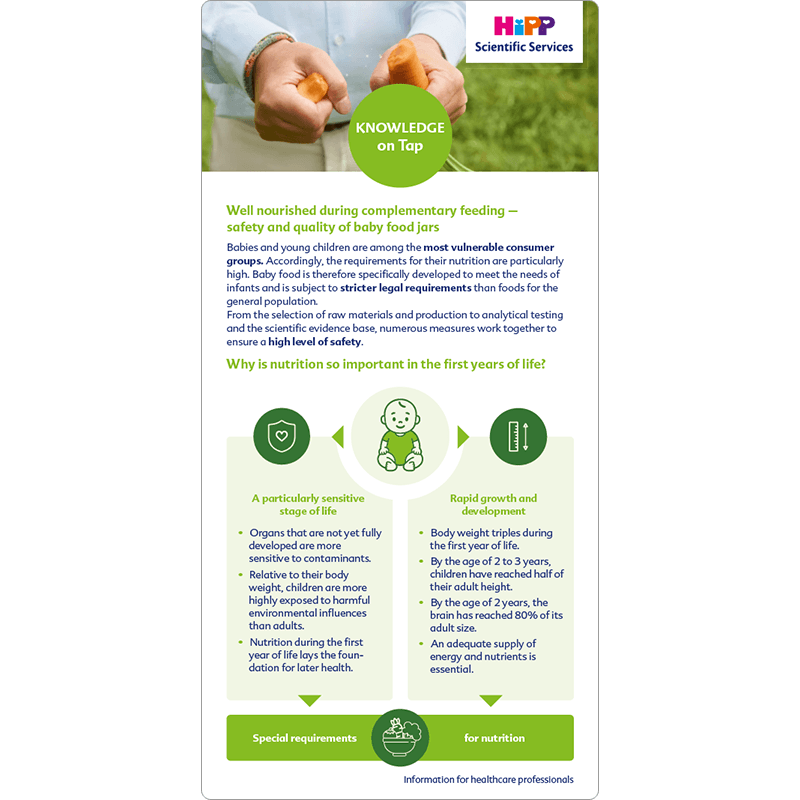
Why is nutrition so important during the first years of life?1,2
The first months and years of life are characterised by particularly rapid growth and development of the body, organs and metabolism. During this period, infants and young children are especially susceptible to food contaminants because, relative to their body weight and size, their exposure to harmful environmental influences is greater than that of adults.
Their immune systems and excretory functions are also not yet fully mature. Infants and young children are therefore considered a particularly vulnerable consumer group.
Moreover, nutrition during the first year of life can already play a preventive role and help lay the foundations for long-term health.
What ensures the safety of baby food?
Strict legal requirements1
Certain undesirable substances, such as toxins or heavy metals, may occur naturally in food. Others are formed only during processing and production. To ensure food safety, the European Union has set strict maximum levels for many of these contaminants. Particularly stringent standards apply to baby food, with substantially lower limits than for many other foods.
These stringent requirements are designed to protect infants and young children and support their healthy development. This is because infants have specific nutritional needs and are more sensitive to undesirable substances.
Foods for this age group are therefore specially developed to ensure a safe nutritional supply and minimise potential exposure to harmful substances. This places exacting demands on the entire production chain, from agricultural production through to manufacturing processes.
Careful selection of raw materials
These stringent legal requirements place particularly high demands on the selection of raw materials.
In addition to high nutritional value, particular emphasis is placed on keeping residue levels as low as possible and maintaining comprehensive control over provenance. Every raw material used must be fully traceable throughout the entire supply chain.
Only raw materials that meet these exceptionally high standards are suitable for the production of baby food. This considerably limits the range of suitable ingredients, as the following example illustrates:
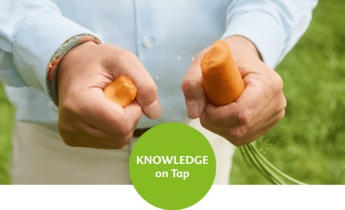
If 200 carrots represent the entire food market, only 16 of them would be organic. In theory, just one of these 16 organic carrots—and one of the 200 carrots available on the market overall—would meet the stringent requirements for raw materials used in baby food.
HiPP premium organic quality
The high quality and safety of HiPP products are founded on a holistic quality concept that begins long before harvest.
By carefully selecting suitable cultivation areas and maintaining close, long-standing partnerships with farmers and suppliers, we monitor every raw material from field to finished product. More than 260 quality checks for every jar throughout the entire production chain ensure the highest levels of quality and safety.
These stringent quality standards and the complete traceability of all ingredients ensure the highest level of safety, transparency and reliability.
Suitable advice card
References:
1 SNE – Baby Foods Safety Infographic 2025
2 Abou-Dakn, M., Abu-Omar, K. et al. (2024): Ernährung und Bewegung von Säuglingen und stillenden Frauen 2024. Monatsschr Kinderheilkd 173 (Suppl 1), 69–93 (2025).