



Is homemade baby food automatically better than jars?
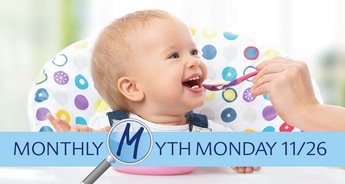
From around the second half of their first year, infants' energy and nutrient requirements increase, and milk alone is no longer sufficient to meet their nutritional needs – so it’s time for complementary food! Homemade food is often considered the better choice for infants during complementary feeding compared with weaning food from jars. But is that really the case?
When discussing complementary feeding, a balanced perspective matters: both options – homemade or weaning food in jars - offer benefits. There is no basis for assuming that homemade baby food is automatically the better choice.
Homemade baby food allows families to choose ingredients individually and offer a wide variety of foods. Safe food preparation and avoiding added salt and sugar are important. Iodine intake also deserves particular attention. (Please always follow the relevant official recommendations.)
Commercially produced baby food in jars must meet strict legal requirements. It offers age-appropriate recipes based on the latest recommendations, saves preparation time and can be practical for use on the go. Some products are fortified with iodine.
Another important difference is that foods used for home cooking are subject to standard food safety regulations, while ingredients used in baby food jars must meet strict limits and requirements specifically designed for the respective age group – especially regarding levels of contaminants.
Let’s use the question “Homemade or jars?” as an opportunity to help each family find an approach that works for them, without judging their choices.
References:
Abou-Dakn M. et al. Monatsschr Kinderheilkd 2025.173 (Suppl 1):S69–S93
Kinzel G. kinderkrankenschwester 44. Jg. (2025) Nr. 09 S. 263f.