



New Rome V criteria published, redefining abdominal pains without organic causes

06.2026
Author Dr. Martin Claßen, Bremen
In most cases where children have abdominal problems, no organic cause can be found, even after careful diagnosis. They were previously described as “functional disorders”, which encompassed symptoms including infant colic, cyclical vomiting and irritable bowel syndrome. For decades, the terminology and definitions of these disorders have been based on the agreements reached at the Rome conferences – for adults and for children. These “Rome criteria” are constantly being updated.
The 5th edition of these criteria (known as Rome V for short) has recently been published. In addition to small updates, this new edition contains fundamental changes both to the choice of terminology and to the range of disorders. A special issue of the magazine “Gastroenterology” has been published with 18 articles on the new Rome V criteria, pathopsychological findings and the disorder definitions – an extremely interesting read.
Fundamental changes in Rome V
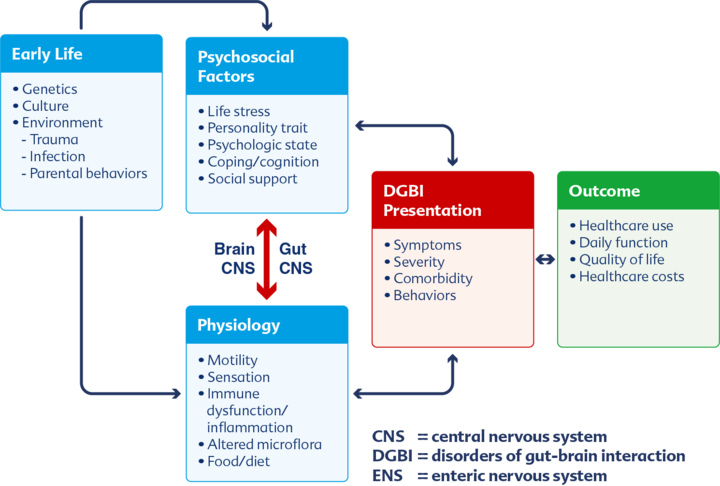
For the first time, Rome V specifies that the term “Functional gastrointestinal disorders” should no longer be used, with the clearer term “Disorders of gut-brain interaction” (DGBI) taking its place. The idea behind it is that “functional causes”, which are often difficult to understand for people who are not medical experts, should be replaced by a description of the components involved in the pathogenesis of the disorder. It aims to increase understanding that problems can exist both in the intestine (microbiome, barrier, motility and intestinal immune system) and in the central perception and processing of stimuli from the stomach, and that biopsychosocial factors also play a major role (Fig. 1).
Changes for children and young people
The division into age groups familiar from Rome IV has been abandoned, and instead the disorders are divided into anatomical regions (upper, lower GI tract and biliary disorders). For the first time, the upper GI tract disorders include diagnoses such as “reflux hypersensitivity”, “reflux-negative esophageal pain”, “aerophagia” and “supragastric belching”, as well as “chronic functional nausea” and “epigastric pain”. There is also a new chapter on functional feeding disorders in infants and toddlers.
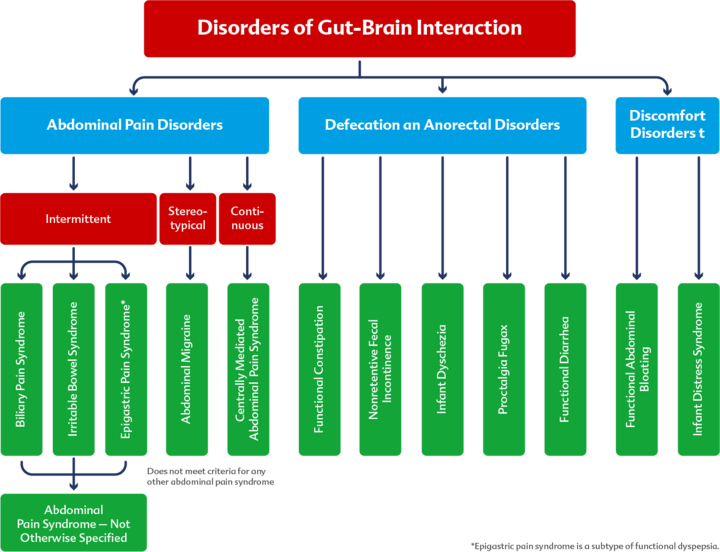
In the article on the lower GI tract, there are three main categories: Abdominal pain disorders, Defecation disorders and Discomfort disorders (Fig. 2). There are new terms such as “Centrally mediated abdominal pain syndrome”, “Functional abdominal bloating” and “Proctalgia fugax”, while the term “infant colic” is replaced by “infant distress”. A brand new term is “Biliary pain syndrome”, which is characterised by pain episodes in the right upper abdomen with acute onset, lasting at least 30 minutes and up to several hours, with no indications of reduction of bile flow or gallstones.
Reference:
Rome V: Disorders of Gut–Brain Interaction. Gastroenterology 2026;170:1083–1416 (Special Issue). www.gastrojournal.org]