


HiPP ORGANIC COMBIOTIC®:
Formula Optimization with Taurine
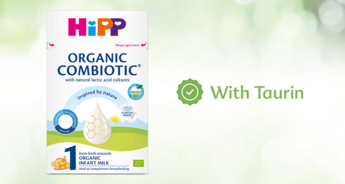
Taurine in All Stages
With the formula optimization from autumn 2026, HiPP ORGANIC COMBIOTIC® milk formulas now contain taurine. This further aligns the composition with the model of human milk while also addressing practical feeding considerations.
Taurine: A Natural Component of Human Milk
Taurine is a sulfur-containing amino sulfonic acid. Unlike proteinogenic amino acids, taurine is not incorporated into proteins but occurs predominantly in its free form within the body. It is found, among other tissues, in the brain, retina, liver, and skeletal muscle. Taurine is present in human milk throughout all stages of lactation and is among the quantitatively most important free amino acids found in human milk.
Taurine is involved in various physiological processes, including intestinal fat absorption. In addition, taurine has been discussed in relation to the development and function of the nervous system and the retina. [1,2]
The human body can synthesize taurine from the sulfur-containing amino acids cysteine and methionine. This endogenous synthesis is developmentally regulated. Particularly during early life, taurine synthesis capacity is lower than later in life; therefore, taurine is supplied via the placenta during pregnancy and subsequently through human milk after birth. [2]
Regulatory Background
According to Commission Delegated Regulation (EU) 2016/127, taurine may be added to infant formula and follow-on formula. When added, the legally permitted maximum level is 2.9 mg/100 kJ or 12 mg/100 kcal. The addition of taurine is permitted but not mandatory. [3]
HiPP ORGANIC COMBIOTIC® Now with Taurine
With the new formulation, all HiPP ORGANIC COMBIOTIC® stages contain taurine. HiPP ORGANIC COMBIOTIC® 1 powder formula and the ready-to-feed formula each provide 3.3 mg taurine per 100 ml of prepared formula. The aim of this formula optimization is to offer a nutrient composition inspired by human milk and to ensure a defined taurine intake through infant milk feeding.
References:
1. Almeida CC, Mendonça Pereira BF, Leandro KC, et al. Bioactive Compounds in Infant Formula and Their Effects on Infant Nutrition and Health: A Systematic Literature Review. International Journal of Food Science. 2021;2021:8850080. doi:10.1155/2021/8850080.
2. EFSA Panel on Dietetic Products, Nutrition and Allergies. Scientific Opinion on the Essential Composition of Infant and Follow-on Formulae. EFSA Journal. 2014;12(7):3760. doi:10.2903/j.efsa.2014.3760.
3. Commission Delegated Regulation (EU) 2016/127 on the specific compositional and information requirements for infant formula and follow-on formula, consolidated version of 29 June 2026.